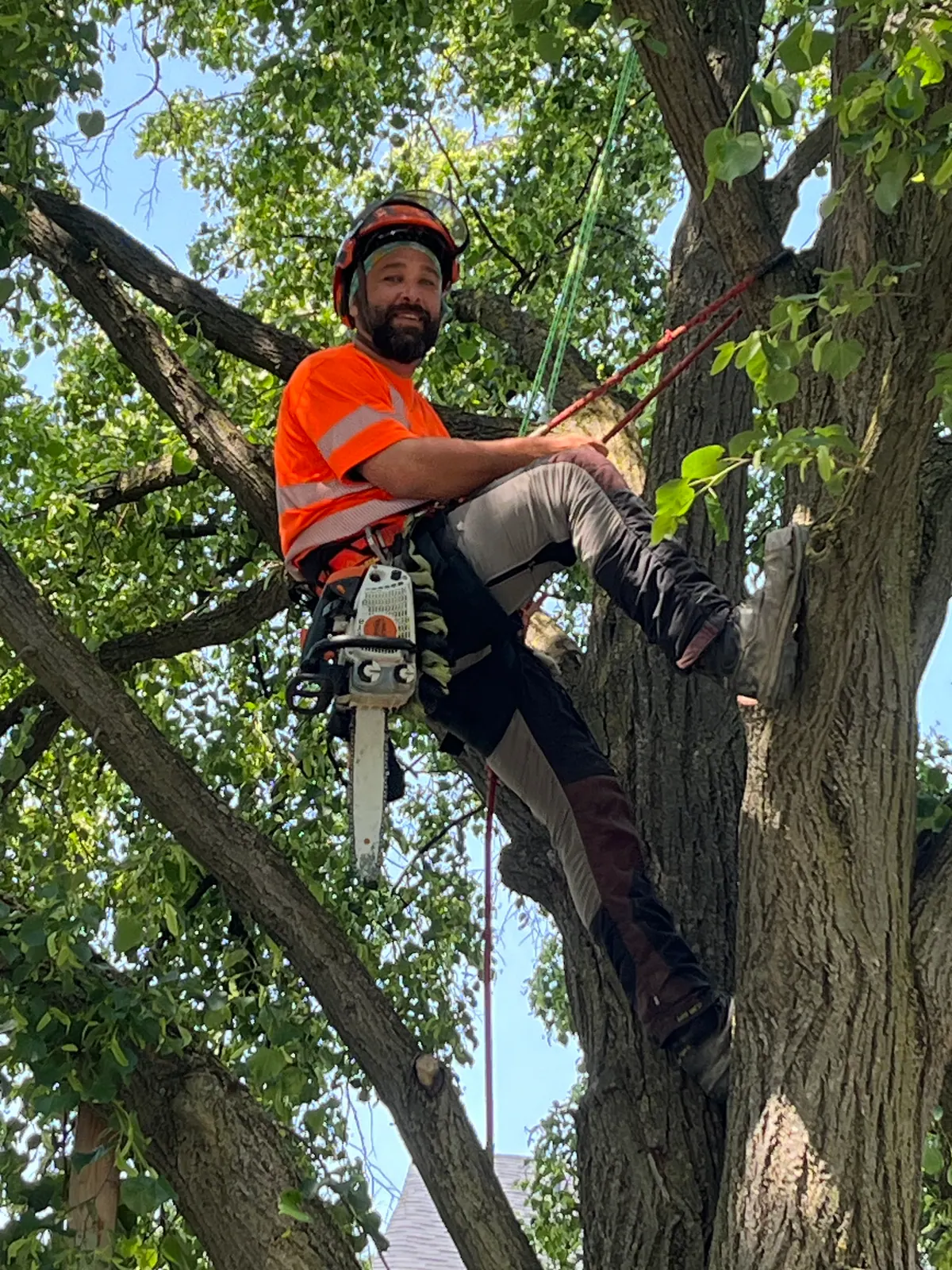
It depends on the tree and on why you are pruning. Dead or dangerous branches can come out whenever you notice them. For shaping, structure and fruit, timing matters more, and the right moment varies with the species. An arborist can tell you what suits your trees.
People often ask for one date on the calendar, and we understand why. But a maple, an apple tree and an evergreen do not all want the same treatment, and pruning with a clear purpose gives better results than pruning on a schedule.
Below we go through the reasons for pruning, how timing changes from one kind of tree to the next, which jobs should not wait for the right season and how to tell when too much has been taken off. Use it as a starting point, then ask us about your own trees so that the advice fits what is actually growing on your property.
Start with the purpose
Before you ask when, ask why. The reason for pruning shapes the timing, the amount you take off and the cuts you make. Green Guard Tree Care does several kinds of pruning, and each has its own logic.
- Structural pruning builds a strong framework and corrects weak or crowded growth
- Pruning for aesthetics shapes the canopy so the tree suits the property
- Pruning for fruit production keeps fruit trees productive and manageable
- Pruning for building clearance keeps branches off roofs, walls and eaves
- Pruning for storm damage preparation removes weak or overextended growth
Timing for different trees
Young trees benefit from early structural pruning, because it is easier to guide a tree while it is growing than to correct it later. Fruit trees have their own needs, and cutting at the wrong moment can cost you a season of fruit. Some species also bleed sap or are open to certain diseases when cut at the wrong time of year.
That is why we do not give a single answer for all trees. Tell us what you have and what you want from it, and we will advise on the timing.
What to expect from a pruning visit
We start by walking around the tree and looking up into it. We ask what you want from it: more light, a stronger shape, better fruit, clearance from the building or less risk in a storm. Then we explain what we would remove, what we would leave and why.
The work itself is done by a Fully Insured crew, and the aim is to leave the tree looking like a healthy version of itself, not like it has been cut. When the job is finished, we clean up before we go. If a tree would be better left alone this season, we will say so, because that is part of giving you honest advice.
When it should not wait
Some jobs should not be put off for the right season. A branch that is dead, cracked or hanging is a safety problem whatever the time of year. So is a limb that rubs a roof or reaches toward a line. If you are worried about something like this, have it looked at now.
How much is too much
More cutting is not better. A tree uses its leaves to feed itself, and removing too much at once can stress it. A careful pruning plan takes off what the tree does not need and leaves what it does, sometimes spread over more than one visit.
We prune for customers in North York, Caledon, Orangeville, Brampton, Mississauga, Richmond Hill, Aurora and Newmarket. Our ISA Certified arborist will look at your trees, explain what we would do and why, and leave your property tidy when the work is done.